
What Is the Best Treatment for Herniated Discs in the Neck?
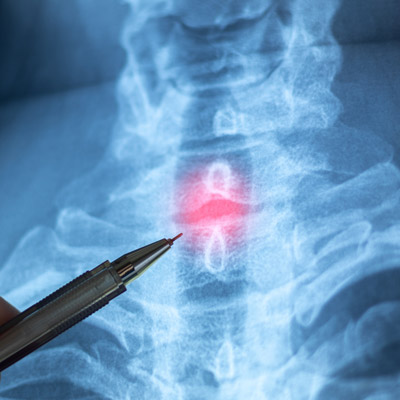
What is the best treatment for herniated discs in neck? Here’s the truth we tell every patient at Newport Center Family Chiropractic: the best treatment isn’t necessarily the most aggressive one. It’s the one that safely relieves your pain, restores function, and helps you avoid surgery when possible.
Let’s walk through your options – from conservative to surgical – so you can make an informed decision about your care.
What Is the Best Non-Surgical Treatment for Herniated Discs in the Neck?
Corrective Chiropractic Care (Posture & Spinal Alignment)
Corrective chiropractic care isn’t about quick adjustments and sending you out the door. It’s about systematically restoring proper cervical alignment and reducing the mechanical pressure crushing your nerves.
Recent case studies show that intensive non-invasive programs based on spinal alignment therapy can promote symptom relief and produce measurable structural changes visible on MRI scans.
Why alignment matters:
- Misalignment increases disc pressure and worsens herniation
- Poor posture (tech neck, forward head position) compounds the problem
- Restoring the natural cervical curve reduces nerve compression
How it works: We analyze your spinal structure, identify where stress is concentrated, and use specific adjustments to restore balance. This isn’t “crack-and-go” chiropractic – it’s corrective care designed to create lasting change.
Cervical Spinal Decompression Therapy
Spinal decompression creates negative pressure within the disc, allowing herniated material to retract away from the nerve root.
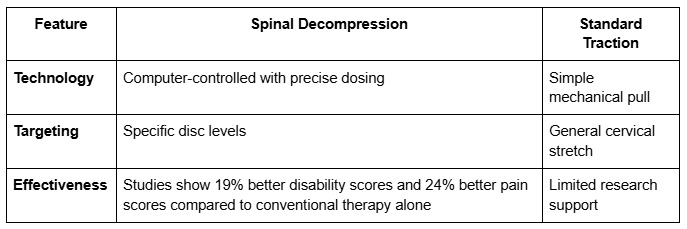
Good candidates include those with:
- Herniated or bulging cervical discs
- Arm pain, numbness, or tingling
- Failed response to standard physical therapy
- Desire to avoid injections or surgery
Important distinction: Decompression uses advanced technology to target specific spinal segments with controlled force. Traction is a simpler, less precise mechanical stretch.
Physical Therapy & Rehabilitation
Physical therapy strengthens the muscles supporting your neck, improves mobility, and helps prevent future injury. However, PT alone often isn’t enough for moderate to severe disc herniations.
What PT addresses:
- Muscle imbalances and weakness
- Range of motion limitations
- Functional movement patterns
When PT alone falls short: If you’ve been in PT for 4-6 weeks without significant improvement, it’s time to add more targeted interventions like chiropractic care or spinal decompression.
Supportive Therapies That Speed Recovery
These complement your primary treatment:
- Therapeutic massage: Releases muscle tension and improves circulation
- Stretching exercises: Maintains flexibility and prevents stiffness
- Heat & cold therapy: Reduces inflammation (ice) and relaxes muscles (heat)
- Ergonomic coaching: Prevents re-injury by correcting workplace posture
Think of these as the support team that helps your primary treatment work better and faster.
Medications and Injections – When Are They Appropriate?
Anti-Inflammatory & Pain Medications
NSAIDs (ibuprofen, naproxen) and muscle relaxants provide short-term symptom relief but don’t address the underlying problem.
- Pros: Fast symptom control
- Cons: Don’t heal the disc; long-term use carries risks (stomach issues, liver damage, dependency)
Epidural Steroid Injections & Nerve Blocks
Cervical epidural steroid injections using an interlaminar approach have shown effectiveness in providing short and long-term relief for pain related to cervical disc herniation.
When they’re considered:
- Severe pain interfering with daily function
- Temporary relief needed while conservative care takes effect
- Failed response to oral medications
Limitations:
- Temporary relief (weeks to months)
- Don’t fix the herniation itself
- Repeated injections have diminishing returns
- Potential side effects (infection, nerve damage, headaches)
When Is Surgery Necessary for a Herniated Disc in the Neck?
Surgery becomes necessary when conservative care fails and specific red flags appear.
Signs You May Need Surgical Intervention
Absolute indications:
- Progressive weakness in arm or hand
- Loss of bowel or bladder control
- Difficulty walking or severe balance problems
- Severe pain unresponsive to 6+ months of conservative care
Clinical guidelines recommend six months as the cutoff for non-operative management, as longer symptom duration before surgery corresponds to worse outcomes.
Common Surgical Options
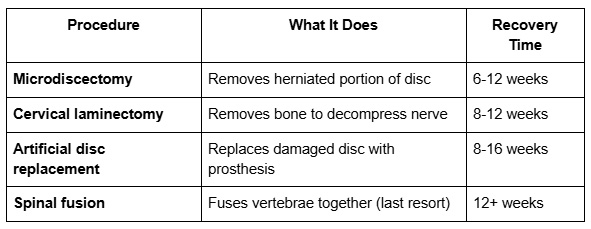
How Do You Choose the Best Treatment for Your Herniated Disc?
The right choice depends on several factors:
- Severity of symptoms:
Mild to moderate cases respond well to conservative care. Severe cases with neurological deficits may need surgery.
- MRI findings:
Large herniations compressing the spinal cord require more aggressive intervention than small bulges.
- Lifestyle & activity level:
Active individuals often benefit most from corrective care that restores full function, not just pain relief.
- Desire to avoid surgery:
Research shows that with the right conservative protocol, most patients can successfully avoid surgery while maintaining high satisfaction and returning to pre-injury activities.
Why conservative-first makes sense:
- Lower risk
- No surgical complications
- Faster return to normal activity
- Addresses underlying causes
- More cost-effective
See more: Does Non-Surgical Spinal Decompression Work? The Evidence-Based Answer
Find Relief with Corrective Chiropractic & Spinal Decompression Therapy
At Newport Center Family Chiropractic, we’ve spent over 20 years helping patients with cervical disc herniations find lasting relief without surgery. Our approach combines:
- Corrective chiropractic adjustments to restore proper alignment
- Cervical spinal decompression to reduce disc pressure
- Rehabilitation exercises to strengthen and stabilize
- Lifestyle coaching to prevent recurrence
Every treatment plan is personalized. We don’t use cookie-cutter protocols – we build a strategy around your specific MRI findings, symptoms, and goals. Most patients notice improvement within 2-4 weeks, with significant relief achieved in 8-12 sessions. We track your progress objectively and adjust the plan as needed.
Ready to find out what’s possible without surgery? Contact Newport Center Family Chiropractic today to schedule your comprehensive evaluation. Let’s create a personalized plan that addresses the real cause of your pain – not just the symptoms.
Newport Center
Family Chiropractic
359 San Miguel Drive
Suite #203
Newport Beach, CA 92660
| Monday | 9:00 AM - 5:00 PM |
| Tuesday | 9:00 AM - 5:00 PM |
| Wednesday | 9:00 AM - 5:00 PM |
| Thursday | 9:00 AM - 5:00 PM |
| Friday | 9:00 AM - 5:00 PM |
| Saturday | 9:00 AM - 12:00 PM |
| Sunday | Closed |
