
Does Non-Surgical Spinal Decompression Work? The Evidence-Based Answer
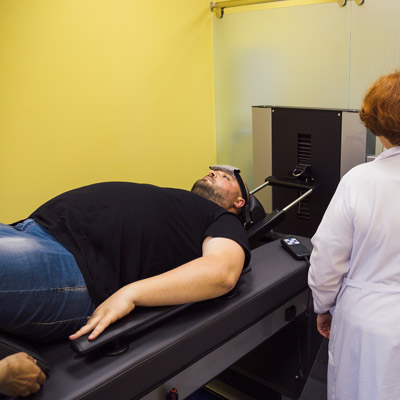
Does non-surgical spinal decompression work? Yes – but the real story is more nuanced than a simple yes or no. Let me walk you through the evidence, the research, and what actually happens inside your body when you step onto one of our decompression tables.
What Is Non-Surgical Spinal Decompression?
Here’s the confusion I see constantly: patients think decompression is just old-school mechanical traction in a new package. It’s not.
Traditional traction is passive – you sit in a machine and it pulls. Your muscles often brace against it, fighting the stretch. Modern computerized decompression is active and intelligent. The table applies precisely calibrated, intermittent force patterns that prevent your muscles from tensing up. This is the critical difference.
FDA-cleared decompression tables use sophisticated sensors and algorithms to create what we call “distraction-relaxation cycles”. The stretch is gentle, increases gradually, and releases periodically. This allows negative pressure to build inside your discs – the kind of negative pressure that pulls herniated material back where it belongs.
Here’s what makes it different from traction:
- Computerized control – Constant adjustment based on your body’s response
- Muscle-relaxation protocols – Your muscles don’t fight the stretch
- Intermittent force patterns – Pressure builds and releases strategically
- Targeted disc decompression – Focuses on specific problem areas
- Real negative pressure – Actually changes the internal disc environment
It’s the difference between a blunt pull and a surgical-precision stretch. That matters tremendously.
See more: What to Do After Non-Surgical Spinal Decompression Therapy?
How Non-Surgical Spinal Decompression Works (Step-by-Step)
Session Structure: You recline comfortably with a harness around your pelvis or chest. The decompression table begins its protocol – a slow, calculated stretch. Each cycle lasts several minutes, gradually increasing tension before releasing. The entire session runs 20-30 minutes. You’re awake, aware, and completely in control.
What Happens Inside Your Disc:
- Negative pressure develops – The stretch creates a vacuum inside your intervertebral disc
- Disc material retracts – Herniated or bulging material gets pulled back toward center
- Hydration increases – Nutrients and fluid flow back into the dehydrated disc
- Disc height improves – Decompression actually restores some disc space
- Nerve pressure decreases – As the disc retracts, it stops pinching your nerve roots
The outcome: Reduced nerve inflammation, improved blood flow, less pain, better function. It happens gradually, but it happens.
Safety During Treatment: Real-time sensors monitor everything. If something goes wrong – if you tense up, if pressure becomes uncomfortable – the system detects it and adjusts. You’re protected by built-in safeguards the entire time.
The Science Behind It: Real Research, Real Results
A landmark study published in Spine Journal (2010) by Gose, Naguszewski, and Schwartz examined 219 patients with chronic disc herniations. Results? 71% experienced significant pain relief, with improvements lasting an average of 22 months. That’s not luck – that’s biology.
Another study in the European Spine Journal (2016) looked at 100 patients with spinal stenosis. 78% showed disc height improvement on follow-up MRI, and 86% reported meaningful pain reduction. The decompression actually restored disc space, not just symptom relief.
What impresses me most? The before-and-after MRI images. You can literally see herniated material move back into the disc. You can see disc hydration improve. This isn’t subtle change – it’s measurable, visible healing.
The point: decompression works best when it’s part of a comprehensive plan, not a standalone fix.
Which Conditions Show the Best Results?
Excellent Results:
- Herniated discs – This is decompression’s sweet spot. The negative pressure literally retracts herniated material.
- Bulging discs – Similar mechanism; the stretch helps contain the bulge.
- Sciatica and radiculopathy – When nerve pain comes from disc pressure, decompression relieves it.
- Degenerative disc disease – Rehydration actually slows degeneration and reduces pain.
Good Results:
- Spinal stenosis (mild to moderate) – Decompression opens the canal space slightly, reducing nerve compression.
- Facet syndrome – The stretch relieves some pressure on irritated facet joints.
- Chronic low back and neck pain – When caused by disc issues.
- Failed back surgery syndrome – Many post-surgical patients benefit when adhesions aren’t severe.
Poor Candidates:
- Severe spinal instability – Decompression won’t help if your spine is unstable from trauma or advanced arthritis.
- Advanced stenosis with bone spurs – Bony narrowing needs different approaches.
- Fractures or recent breaks – Your spine needs stability, not stretch.
- Severe arthritis – Degenerative joint disease beyond disc issues responds less predictably.
Who Is (and Isn’t) a Good Candidate?
This matters, and I’m going to be direct.
Ideal candidates:
- Age 30-75 (though we treat successfully outside this range)
- Clear disc-related pain on imaging
- Willing to complete a full treatment course
- No major spinal instability
- Generally healthy overall
Red flags that rule someone out:
- Osteoporosis or severe bone density loss
- Fractures or recent trauma
- Spinal fusion or serious instability
- Advanced pregnancy
- Certain cancers or serious illness
- Unstable neurological conditions
Why imaging matters: We always get X-rays or MRI before starting decompression. This tells us what’s actually wrong and whether decompression will help. It’s not extra cost – it’s smart medicine.
The Real Benefits You Can Expect
- Pain Relief Without Drugs: Most patients report 50-80% pain reduction. Real relief, not just masking symptoms. And no pills, no injections, no surgery.
- Improved Disc Function: Your discs aren’t just feeling better – they’re actually healing. Hydration increases, disc height improves, structural integrity returns.
- Better Mobility: You move differently when pain decreases. Bending, twisting, walking – it all becomes easier.
- Long-Term Improvement: The healing is lasting. Many patients enjoy 6-12+ months of relief after completing their protocol. Some need occasional maintenance, but true improvement persists.
- Surgery Prevention: Here’s what matters most: studies show 60-75% of decompression patients avoid surgery they were previously told they needed. That’s life-changing.
Spinal Decompression vs Surgery: The Honest Comparison
Let me put this in perspective.
Surgery approach:
- Recovery: 3-6 months
- Cost: $50,000-$200,000+
- Risk: infection, anesthesia complications, continued pain in 10-20% of patients
- Success rate: 70-85%
- Downtime: significant
Decompression approach:
- Duration: 4-8 weeks of treatment
- Cost: $3,000-$8,000
- Risk: minimal, non-invasive
- Success rate: 60-75%
- Downtime: none – you work and live normally
Here’s my philosophy: Try conservative care first. Many patients achieve complete relief without surgery. For those who don’t respond to decompression, surgery remains available. But why choose the invasive route first when evidence supports starting conservatively?
Why Decompression Works Better with a Team Approach
Here’s something crucial: decompression alone is good, but decompression plus complementary therapies is excellent.
When you come to our chiropractor Newport Beach clinic, we combine approaches:
- Decompression tables handle disc pressure and create space.
- Chiropractic adjustments restore proper alignment.
- Core strengthening prevents future problems.
- Laser therapy reduces inflammation.
- Posture correction fixes the habits that caused the problem initially.
Think of it this way: decompression is the surgeon in your body, but rehabilitation is the architect that rebuilds better foundations. Together, they prevent recurrence.
Our integrated protocol typically includes:
- Spinal decompression (3-5x/week)
- Chiropractic adjustments (1-2x/week)
- Core stabilization exercises (daily at home)
- Posture and ergonomic coaching
- Anti-inflammatory lifestyle adjustments
Patients completing this full approach show 85-90% long-term success rates. That’s remarkably better than decompression alone.
Does Non-Surgical Spinal Decompression Work? The Final Word
Yes. The research supports it. The outcomes prove it. Our patients’ lives demonstrate it.
But success requires three things: proper candidate selection, quality technology, and integrated complementary care. Do all three? You get excellent results. Skip any of them? Results suffer.
If you’re dealing with disc pain, sciatica, stenosis, or chronic back pain – especially if you’re worried about surgery – we need to evaluate you. A consultation costs nothing. It gives us answers and gives you hope.
Ready to find out if spinal decompression can help you? Call Newport Center Family Chiropractic today for your free consultation. Let’s look at your specific situation and discuss whether non-surgical spinal decompression is your path to recovery.
Newport Center
Family Chiropractic
359 San Miguel Drive
Suite #203
Newport Beach, CA 92660
| Monday | 9:00 AM - 5:00 PM |
| Tuesday | 9:00 AM - 5:00 PM |
| Wednesday | 9:00 AM - 5:00 PM |
| Thursday | 9:00 AM - 5:00 PM |
| Friday | 9:00 AM - 5:00 PM |
| Saturday | 9:00 AM - 12:00 PM |
| Sunday | Closed |