
Not All Spinal Decompression Tables Are the Same: Why Technology Can Matter More Than You Think
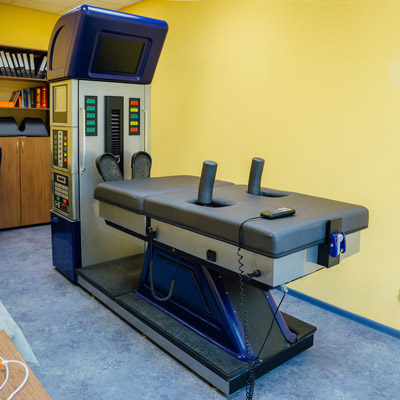
You might have noticed something interesting: two different clinics both advertise spinal decompression tables, yet patients describe very different experiences and outcomes.
One patient describes comfortable, pain-free sessions that gradually relieved their sciatica. Another felt more tension during treatment and didn’t notice meaningful improvement. Same therapy name. Different results.
The confusion starts early. Many people use the terms “decompression,” “traction,” and “inversion therapy” interchangeably. They see marketing claims about “advanced systems” and wonder: are these just clever labels, or do the differences actually matter? Does technology genuinely affect what happens to your spine?
Are All Spinal Decompression Tables the Same?
Short answer: No.
You might see five clinics with what appear to be the same pieces of equipment. But behind the exterior, the differences in design, software, and capability can be substantial.
Major Differences Between Systems
Different types of spinal decompression tables vary significantly in several ways:
Treatment Precision
Some systems allow providers to target specific spinal segments (L4-L5, L5-S1, C5-C6, etc.) with high accuracy. Others apply more general traction across broader areas. Precision matters when you have a herniated disc at one specific level and healthy discs above and below it.
Software Control
Advanced systems feature programmable treatment protocols. You can adjust force, angle, duration, and force ramps to match your body’s response. Basic systems might offer fewer customization options.
Positioning Options
Can you be treated lying flat? At an angle? In different spinal curves? Flexibility in positioning helps accommodate different body types and conditions. A patient with severe stenosis might need a different position than someone with a disc herniation.
Force Delivery
How is force applied? Smoothly or in increments? Continuously or in cycles? Some systems deliver force more gradually, while others apply it more mechanically. This affects patient comfort and muscle relaxation.
Patient Comfort Features
Does the table have cushioning options? Can you adjust support? Can the system detect when muscles are tensing and automatically reduce force? Comfort features support better compliance and relaxation during treatment.
Why These Differences Can Affect Your Treatment Experience
Here’s the practical reality: if treatment feels uncomfortable or creates muscle tension, your body naturally guards. Guarding muscles can reduce the effectiveness of decompression and make you less likely to complete the full treatment series.
A more comfortable system, with better positioning options and smoother force delivery, might allow you to relax more fully. And relaxation is actually part of the therapeutic process.
We’re not saying one brand is “better” than another – that’s not the point. We’re saying that differences in design and technology can influence both comfort and consistency. Both matter for outcomes.
Spinal Decompression vs. Traditional Traction: Understanding a Common Misconception
One of the most frequent questions we hear: “Isn’t this just traction with a fancy name?”
The honest answer: they’re related, but different.
How Traditional Traction Works
Traditional traction – the kind used in hospitals, physical therapy clinics, and some chiropractic offices for decades – works by applying a pulling force to the spine to create separation between vertebrae.
The mechanism is simple: a harness around your pelvis and torso applies steady, sustained pull. This pull is usually:
- Manual (applied by a therapist using their hands or body weight)
- Or mechanical (applied by a machine with a set amount of force)
Traction can help with pain and may provide temporary relief. It’s been used clinically for years and has research supporting its use.
How Decompression Systems Evolved
Advanced spinal decompression systems built on traction concepts but added sophistication. Modern decompression tables incorporate:
- Computerized control – precise, programmable force application
- Intermittent protocols – traction applied and released in specific cycles
- Segment-specific targeting – ability to focus on particular spinal levels
- Patient feedback mechanisms – systems that respond to your body’s response
- Treatment customization – parameters adjusted based on diagnosis and tolerance
The goal is more effective pressure reduction and better clinical outcomes than traditional traction alone could achieve.
Why The Confusion Exists
Both use traction as the primary mechanism. Both pull on the spine to create space. Both can help certain spinal conditions. So of course people use the terms interchangeably – they’re similar enough that the distinction isn’t obvious.
But the evolution from traction to modern decompression reflects advances in understanding and technology. Newer isn’t always better, but in this case, the added precision does seem to make a clinical difference for many patients.
Why Precision May Matter for Disc-Related Conditions
Here’s why the distinction matters most: disc problems are local. Your herniated disc is at L5-S1, not L4-L5. Your bulging disc affects a specific nerve, not all nerves.
A system that can target that specific level, with specific force parameters, adjusted for your specific tolerance, may accomplish more than general traction alone. Not guaranteed – but supported by how we understand spine biomechanics.
Features That Can Influence Treatment Quality
Before we talk about specific systems like the Triton DTS, let’s discuss what actually matters in a best spinal decompression table.
For patients, the technical specifications only matter if they change your comfort and treatment experience. So let’s focus on the features that actually affect what you feel and experience.
Precision Targeting of Affected Spinal Segments
The Question: Can your treatment focus specifically on problem areas, or does it affect your whole spine?
Why It Matters: Different spinal levels require different approaches. Your lower back works differently than your neck. Your lower back discs are larger and handle different forces. Treatment that accounts for these differences may be more effective.
A decompression table that can adjust angle, height, and force specifically for your problem segment can create more targeted relief than one-size-fits-all traction.
Controlled and Gradual Force Application
The Reality: Patients with severe pain often have muscle guarding – muscles tense up to protect the painful area.
The Problem: If treatment applies force too quickly or abruptly, muscles tense even more. Tense muscles reduce effectiveness and increase discomfort.
The Solution: Systems that apply force smoothly and gradually, building from gentle to moderate over the course of treatment, often allow muscles to relax. Relaxed muscles mean better decompression and better patient tolerance.
This is why you might feel comfortable throughout one treatment, while the same therapy on a different table causes tension. The force delivery profile differs.
Treatment Positioning Flexibility
Different positions create different experiences and outcomes:
- Supine (lying flat) – neutral position, good for general lower back decompression
- Semi-inclined – angles the spine differently, may better target certain disc problems
- Flexed positions – creates different mechanical advantage for targeted decompression
A table offering positioning flexibility allows your provider to match treatment position to your specific condition. More options mean better customization.
Comfort During Treatment Sessions
This seems obvious but is often overlooked: if you’re uncomfortable, treatment is less effective.
Why? Because:
- Discomfort triggers muscle guarding
- Guarding reduces the decompression effect
- You’re less likely to complete the treatment series
- Stress hormones and pain responses interfere with healing
A truly comfortable treatment experience isn’t a luxury – it’s part of the clinical protocol. Systems designed with patient comfort as a priority often achieve better outcomes than those that view comfort as secondary.
Why Comfort During Decompression Is More Important Than Most People Realize
You might be thinking: “It’s therapy. It doesn’t have to feel amazing”.
Actually, comfort is more clinically significant than most realize.
Muscle Guarding Can Interfere With Treatment
When you’re in pain, your nervous system protects the painful area by tightening muscles. This is called guarding. It’s automatic and protective but it can work against decompression.
If muscles are tense during treatment, they resist the decompression force. Instead of the disc getting pressure relief, the force gets absorbed by muscle tension. You might feel like you’re being pulled rather than decompressed.
Relaxation May Support More Consistent Therapy
Patients who feel comfortable during treatment:
- Complete more sessions without missing appointments
- Relax more fully, allowing better decompression
- Experience less fear or anticipation of discomfort
- Have better muscle relaxation between sessions
- Report better treatment tolerance overall
Consistency over 4-8 weeks of treatment matters. Every session builds on the previous one. Missing sessions or incomplete relaxation sets you back.
Why Patient Experience Matters in Long-Term Treatment Plans
Decompression isn’t a one-session fix. Most patients need 15-25 sessions over 4-8 weeks for meaningful results. That’s a significant time commitment.
If every session feels uncomfortable or tense, you’re less likely to stick with the full protocol. And incomplete treatment usually means incomplete results.
The system you choose, and the comfort it provides, directly affects your likelihood of completing treatment and your ultimate outcomes.
How Advanced Systems Like Triton DTS Approach Treatment Differently
One system that represents modern decompression technology is the Triton DTS decompression table. It’s not the only advanced option, but it’s a good example of how newer systems differ from traditional traction or older decompression tables.
The Triton DTS was designed with several considerations:
Microprocessor Control
Rather than manual force application or simple mechanical settings, the Triton uses computer control to manage force, angle, and treatment timing. This allows for precise, repeatable protocols adjusted to your specific condition.
Intermittent Decompression Cycles
Instead of continuous pulling, the system applies decompression in controlled cycles—pull, hold, release, repeat. This cycle approach is designed to reduce intradiscal pressure more effectively than continuous pull alone.
Segmental Targeting
The table allows providers to focus decompression on specific spinal segments. Your provider can set parameters to target your problem area rather than applying general traction across your entire spine.
Patient Feedback Integration
Advanced systems can detect changes in your muscle tone and adjust force accordingly. If muscles start guarding, force automatically reduces. This keeps treatment comfortable and effective.
Customizable Treatment Protocols
Your treatment isn’t the same as the person’s treatment next week. The Triton allows protocols to be customized based on diagnosis, condition severity, and your individual response.
Comfort-Focused Design
The table is designed with patient comfort as a priority. Cushioning, support, positioning options, and smooth force delivery are all engineered to make treatment tolerable for patients with severe pain.
Does this mean the Triton is the “right” choice for everyone? No. But it represents how modern decompression technology has evolved beyond basic traction principles.
Finding the Right Provider and System for Your Condition
Here’s what matters when you’re considering decompression therapy:
- Proper Diagnosis
Before any decompression treatment, you need imaging (MRI or X-rays) confirming a disc-related problem. Not all back pain is disc-related, and decompression won’t help all conditions.
- Clinical Experience
Work with a provider who regularly performs decompression and has experience treating your specific condition. Ask how many patients they’ve treated and what their outcomes are like.
- System Knowledge
Your provider should understand their equipment well and be able to explain how it’s being used for your condition. They should be able to answer technical questions.
- Realistic Expectations
Be wary of providers promising cure or guaranteed results. Decompression may help, but outcomes vary. Good providers discuss realistic expectations upfront.
- Patient Comfort Priority
A good clinic prioritizes your comfort during treatment. If early sessions are uncomfortable, that should be addressed immediately.
At Newport Center Family Chiropractic, we use advanced decompression technology because we’ve seen how it improves patient outcomes and treatment tolerance. But we know that technology is only part of the equation. Clinical skill, patient education, and appropriate case selection matter equally.
The Bottom Line
Not all spinal decompression tables are the same, and these differences can actually matter for your experience and results. Modern decompression systems represent evolution in technology and our understanding of how to safely decompress the spine.
Better precision, smoother force delivery, greater comfort, and customizable protocols often translate to better patient outcomes.
But technology is just one part of the equation. A skilled provider using equipment appropriately matters more than having the most advanced system. And realistic expectations matter more than promises.
If you’re considering decompression therapy, take time to understand:
- Whether your condition is appropriate for decompression
- What system and approach your provider uses
- What experience they have with your specific problem
- What realistic outcomes might look like for you
If you’d like to discuss whether decompression might help your condition, we’re here to answer questions. A consultation can help clarify whether this approach is right for you. Contact us now!
Disclaimer: This article is educational and should not replace professional medical advice. Consult with a healthcare provider about your specific condition and treatment options.
See more: Spinal Decompression Therapy Cost: What You Should Know Before Starting Treatment
Newport Center
Family Chiropractic
359 San Miguel Drive
Suite #203
Newport Beach, CA 92660
| Monday | 9:00 AM - 5:00 PM |
| Tuesday | 9:00 AM - 5:00 PM |
| Wednesday | 9:00 AM - 5:00 PM |
| Thursday | 9:00 AM - 5:00 PM |
| Friday | 9:00 AM - 5:00 PM |
| Saturday | 9:00 AM - 12:00 PM |
| Sunday | Closed |
