
How to Sleep Better With Sciatica: Positions and Tips That May Help
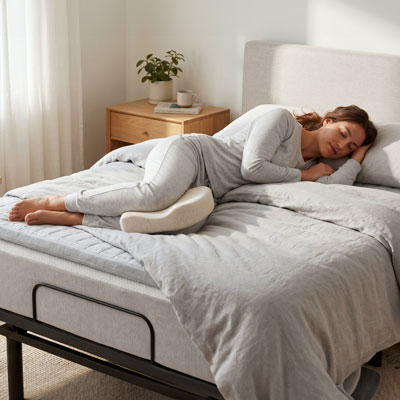
Trying to sleep better with sciatica can be difficult when pain, tingling, or numbness follows you into bed. You may feel comfortable at first, only to wake up later with pain traveling through your buttock or leg.
There is no single sleeping position that works for everyone. The goal is to find a position that supports your body without increasing symptoms down the leg. Small changes to your sleeping position, pillow placement, and nighttime routine may make rest more comfortable.
Why can sciatica make it hard to sleep?
Sciatica occurs when a nerve root that contributes to the sciatic nerve becomes irritated or compressed. Pain often starts around the lower back or buttock and travels down one leg. Tingling, numbness, burning, or weakness may also occur.
A herniated disc is one possible cause. Bulging discs, spinal stenosis, and other changes around the lower spine can also affect nearby nerves.
At night, staying in one position for a long time may make symptoms more noticeable. Certain positions may also feel better or worse depending on the cause of your sciatica.
What are the best sleeping positions for sciatica?
1. Sleep on your side with a pillow between your knees
Try lying on the side opposite the painful leg. Bend your knees slightly and place a pillow between them.
How to position yourself:
- Lie on your side with your shoulders and hips comfortably aligned.
- Bend your knees slightly.
- Place a pillow between your knees.
- If there is a gap between your waist and the mattress, place a small pillow or folded towel there for additional support.
The pillow between your knees helps support your hips and pelvis while reducing unwanted twisting during sleep. If this position increases your symptoms, try another position.
2. Try a gentle fetal position
The fetal position may feel comfortable for some people, particularly when sciatica is associated with a disc problem.
How to position yourself:
- Lie on your side.
- Gently bring your knees toward your chest.
- Keep your body in a relaxed C shape.
- Place a pillow between your knees if it feels more comfortable.
Do not curl your body too tightly. If this position increases your back or leg symptoms, return to a more neutral side sleeping position.
3. Sleep on your back with a pillow under your knees
Back sleeping can also provide a comfortable position for the lower back.
How to position yourself:
- Lie flat on your back.
- Place a pillow under your knees.
- Allow your knees to remain slightly bent.
- Keep your head and neck comfortably supported.
If you need additional support, you can try placing a small rolled towel under your lower back. Use it only if it makes the position more comfortable.
What sleeping positions should you avoid with sciatica?
There is no position that every person with sciatica must completely avoid. However, certain positions may place more strain on the lower back or aggravate symptoms.
1. Sleeping on your stomach
Stomach sleeping is generally less preferred when you have sciatica because it may place additional strain on the lower back.
If possible, choose a side or back sleeping position instead. If you naturally roll onto your stomach during the night, change positions if you notice that your back or leg symptoms become worse.
2. Sleeping with your spine or hips twisted
Avoid sleeping with your upper body facing one direction while your pelvis and legs rotate in another.
This type of twisting may make the lower back less comfortable. When sleeping on your side, a pillow between your knees can help keep your hips and pelvis better supported.
5 nighttime tips that may help with sciatica
Along with finding a comfortable sleeping position, a few simple nighttime habits may help reduce discomfort and make it easier to rest.
1. Use pillows for extra support
If you sleep on your side, place a pillow between your knees to help support your hips and pelvis. If you sleep on your back, try placing a pillow under your knees to keep them slightly bent.
Experiment with pillow thickness until you find a setup that feels comfortable without increasing your leg symptoms.
2. Choose a supportive mattress
A mattress that is too soft or too firm may be uncomfortable for some people with lower back pain. A medium firm mattress may provide a useful balance between support and comfort.
Mattress preference varies from person to person, so pay attention to how your back and leg symptoms respond rather than assuming that a firmer mattress is always better.
3. Try gentle stretching before bed
Gentle movement or stretching before bed may help reduce muscle stiffness around the lower back, hips, and buttocks.
For example, you can try lying on your back and gently bringing one knee toward your chest. Hold the stretch briefly without forcing the movement.
Stop if a stretch increases pain, tingling, or numbness down your leg.
4. Try heat or cold for short term comfort
Heat or cold may provide temporary relief before bed. Cold may feel better when symptoms have recently flared, while heat may be more comfortable when the surrounding muscles feel tight or stiff.
Apply heat or cold for about 15 to 20 minutes at a time, with a protective layer between the pack and your skin. Stop if it causes discomfort or skin irritation.
5. Get in and out of bed carefully
Sudden twisting when getting into or out of bed may aggravate an already sensitive lower back.
When getting up, roll onto your side first. Move your legs toward the edge of the bed, then use your arms to help push your upper body upright. Move slowly and avoid twisting your lower back as you stand.
What to do when sciatica keeps you up at night
Sleep modifications can improve comfort, but they do not address every cause of sciatica.
Consider having your symptoms evaluated if:
- Sciatica continues for several weeks.
- Pain regularly interrupts your sleep.
- Numbness or tingling persists or spreads.
- Weakness develops in the leg or foot.
- Symptoms increasingly affect walking or daily activities.
New bowel or bladder problems, numbness around the groin or saddle area, or rapidly worsening leg weakness require prompt medical attention.
Can spinal decompression help persistent sciatica?
When sciatica continues despite changes in sleeping position and daily habits, identifying the underlying cause becomes important.
For some people with disc related problems or nerve compression in the lower spine, non surgical spinal decompression may be considered as a conservative treatment option. It uses controlled traction to gently stretch targeted areas of the spine.
At Newport Center Family Chiropractic, spinal decompression is used for appropriate cases of chronic and severe sciatica. Deep tissue laser therapy may also be included depending on the condition and examination findings.
The right approach depends on the cause of the symptoms, their severity, and whether neurological problems are present.
Frequently asked questions about sleeping with sciatica
What is the best sleeping position for sciatica?
There is no single best position for everyone. Sleeping on your back with a pillow under your knees or on your side with a pillow between your knees may be comfortable. Choose a position that does not increase your leg symptoms.
Should I sleep on the painful side with sciatica?
You can sleep on either side if it feels comfortable. If lying on the painful side increases pain, numbness, or tingling, try the other side.
Is it better to sleep on your back or side with sciatica?
Both can work. Back sleeping with knee support and side sleeping with a pillow between the knees are common options. Your symptoms should guide your choice.
Why does my sciatica seem worse at night?
Remaining in one position for a long time can make symptoms more noticeable. Your sleeping position and the underlying cause of the nerve irritation may also influence nighttime discomfort.
Can a bad sleeping position make sciatica worse?
A sleeping position can aggravate existing symptoms, but it does not necessarily cause sciatica. Change positions if pain, tingling, or numbness becomes worse or travels farther down your leg.
Finding relief when sciatica keeps affecting your sleep
Learning how to sleep better with sciatica can make difficult nights more manageable, but recurring pain that disrupts sleep may require attention to the underlying cause.
At Newport Center Family Chiropractic in Newport Beach, Dr. Mike Digrado, D.C., with more than 23 years of experience, evaluates chronic and severe sciatica to determine whether spinal decompression and deep tissue laser therapy may be appropriate.
If sciatica continues to interfere with your sleep or daily activities, contact us to schedule an evaluation.
Newport Center
Family Chiropractic
359 San Miguel Drive
Suite #203
Newport Beach, CA 92660
| Monday | 9:00 AM - 5:00 PM |
| Tuesday | 9:00 AM - 5:00 PM |
| Wednesday | 9:00 AM - 5:00 PM |
| Thursday | 9:00 AM - 5:00 PM |
| Friday | 9:00 AM - 5:00 PM |
| Saturday | 9:00 AM - 12:00 PM |
| Sunday | Closed |
