
Bulging Disc vs Herniated Disc: What’s the Difference?
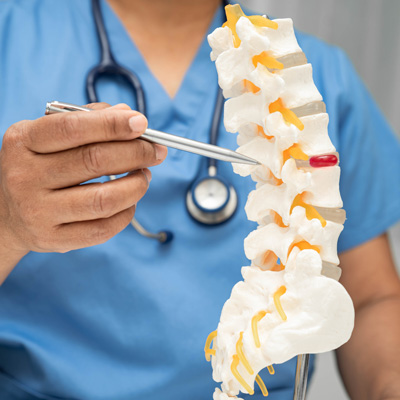
What’s the difference between Bulging disc vs Herniated disc? Here’s the straightforward answer: a bulging disc occurs when the disc extends beyond its normal boundary without rupturing, while a herniated disc happens when the outer layer tears and the inner gel-like material leaks out.
Let’s clear up the confusion and help you understand what’s really happening with your back.
Understanding Spinal Discs
Your spinal discs are the unsung heroes of your back. These cushiony pads sit between each vertebra, acting like shock absorbers every time you bend, twist, or even just walk down the street. They’re made of a tough outer ring (the annulus fibrosus) and a gel-like center (the nucleus pulposus)
Here’s where things get interesting: despite what many people say, discs don’t actually “slip” out of place. The term “slipped disc” is a misnomer that’s stuck around since our grandparents’ time. Your discs are firmly attached to the vertebrae above and below them. What really happens is they bulge, herniate, or degenerate – but they never slip like a hockey puck on ice.
What Is a Bulging Disc?
A bulging disc is like a hamburger patty that’s been pressed too hard – it spreads out beyond the bun but stays intact. When disc degeneration occurs, the disc loses some of its water content and height, causing it to bulge outward beyond its normal boundaries. The good news? The outer layer remains unbroken, keeping the inner material contained.
What causes a bulging disc in the first place?
- Time is often the biggest culprit. As we age, our discs naturally lose hydration
- Poor posture compounds the problem.
- Repetitive strain from lifting, bending, or twisting
The symptoms of a bulging disc tend to be more manageable than their herniated cousins.
- Stiffness in your back, especially in the morning.
- Dull, achy pain that feels like it’s deep in your spine.
- Your range of motion might decrease
When should you worry about a bulging disc?
If the bulge starts pressing on nearby nerves or if your symptoms begin affecting your daily life, it’s time to take action.
What Is a Herniated Disc?
Now, a herniated disc is a different beast entirely. Imagine that same jelly donut, but this time someone squeezed it hard enough that the jelly burst through the dough. That’s essentially what happens when you have a herniated disc – the tough outer layer tears, and the inner gel-like material pushes through.
Unlike bulging discs that develop gradually, herniated discs often result from a specific incident. For example:
- Lifting a heavy box with your back instead of your legs.
- Twisting awkwardly during sports,
- Or a weakened disc that’s been bulging for years finally giving way.
The symptoms of a herniated disc:
- Sharp, shooting pain is common.
- Sciatica with pain radiating down your leg.
- Numbness and tingling in your arms or legs often accompany the pain. Weakness in specific muscles.
Why do herniated discs cause such intense symptoms?
It’s all about location and inflammation. When that inner disc material leaks out, it not only mechanically compresses nerves but also triggers an inflammatory response.
Bulging Disc vs Herniated Disc: Key Differences Explained
The fundamental difference between these two conditions lies in the degree of disc damage. A bulging disc maintains its structural integrity – think of it as stretched but not broken. A herniated disc involves an actual rupture, where the containment system fails.
This structural difference translates directly into symptom patterns. Bulging discs typically cause localized discomfort and stiffness. Herniated discs, on the other hand, often trigger that radiating pain we mentioned – the kind that travels down your arm or leg like a lightning bolt.
The risk of nerve involvement also differs significantly. While a bulging disc can certainly press on nerves, a herniated disc is more likely to cause severe nerve compression. This explains why herniated disc patients more frequently experience those neurological symptoms like numbness and weakness.
Here’s a comparison that makes the differences crystal clear:
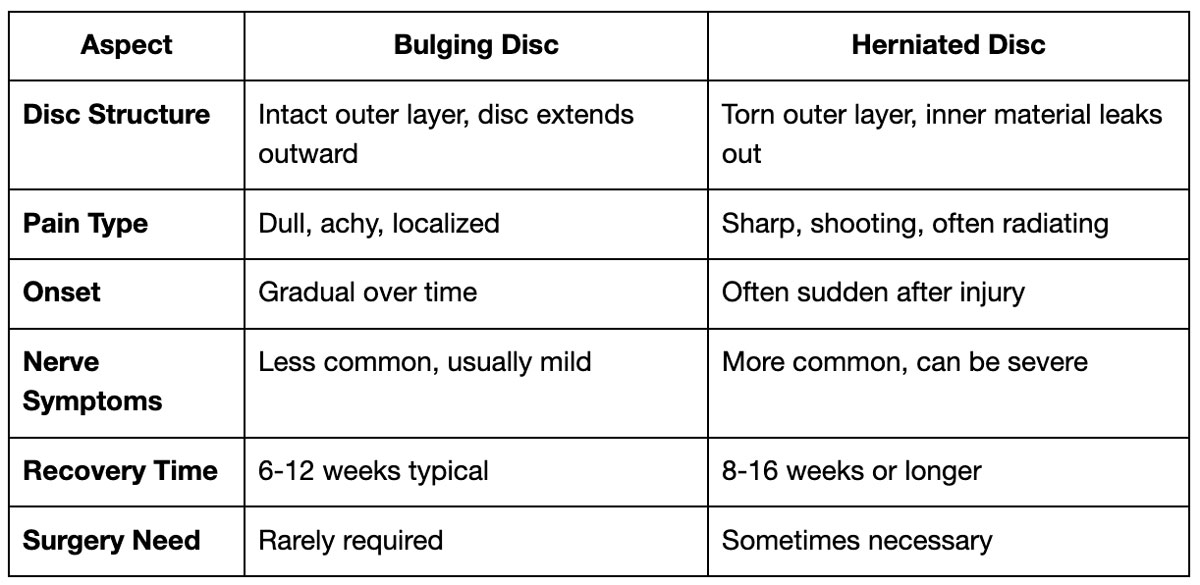
So which one is “worse”? It’s not that simple. We’ve seen bulging discs cause more problems than small herniations, and vice versa. What matters most is how your specific condition affects your nerve function and quality of life.
Similarities Between Bulging and Herniated Discs
Despite their differences, bulging and herniated discs share quite a bit of common ground. Both conditions often stem from the same risk factors:
- Age plays a role in both
- Poor posture affects both equally
- Obesity increases pressure on all spinal structures, accelerating both disc bulging and increasing herniation risk.
The early symptoms often overlap too. Both conditions can cause:
- Back pain
- Reduced range of motion
- Morning stiffness
This symptom overlap is exactly why professional evaluation matters so much.
Here’s the kicker: you can’t definitively diagnose whether you have a bulging or herniated disc based on symptoms alone. We need imaging and a thorough examination to know what we’re dealing with.
How They Are Diagnosed
Your medical history provides crucial clues about whether we’re dealing with disc degeneration, a bulging disc, or a herniation.
The physical exam tells us even more. We check your reflexes, muscle strength, and sensation patterns. Simple tests like having you walk on your heels or toes can reveal nerve involvement. The straight leg raise test – where we lift your leg while you’re lying down – often reproduces symptoms if a disc is pressing on nerve roots.
Imaging provides the definitive answer. While X-rays show bone structure, they can’t visualize discs directly. MRI is the gold standard for disc problems, showing us exactly where and how severely your disc is affected. Sometimes we’ll recommend a CT scan if MRI isn’t suitable for you.
Neurological testing might be necessary if we suspect significant nerve compression.
Treatment Options: Bulging Disc vs Herniated Disc
Conservative/Non-Surgical Care
- Spinal Decompression Therapy – Creates negative pressure within the disc, like a vacuum that draws bulging or herniated material back toward the center.
- Chiropractic Adjustments – Ensure proper spinal alignment so pressure distributes evenly across discs instead of concentrating in problem areas.
- Strengthening Programs – Build core muscles that act as your body’s natural back brace.
- Soft Tissue Therapy – Addresses muscle spasms and tension that accompany disc problems.
- Posture Correction – We teach proper sitting, standing, and movement patterns to protect your discs from further damage.
Advanced Treatments
Epidural steroid injections can provide powerful anti-inflammatory effects directly where you need them most. Nerve blocks offer temporary but significant relief, buying time for healing to occur.
Surgery becomes a consideration only in specific circumstances: severe herniation causing progressive neurological deficits, loss of bowel or bladder control, or failure of conservative treatment after 6-12 weeks with worsening symptoms.
See more: Spinal Decompression Therapy for Herniated and Bulging Discs
Your Path to Recovery Starts Here
Understanding the difference between a bulging disc and a herniated disc empowers you to make informed decisions about your care. While herniated discs involve more structural damage than bulging discs, both conditions often respond remarkably well to the right conservative treatment approach.
The key is starting with safe, effective non-surgical care that addresses the root cause of your pain. Spinal decompression therapy, combined with chiropractic adjustments and targeted rehabilitation, offers a proven path to recovery without the risks and downtime of surgery.
Book a consultation at Newport Center Family Chiropractic, and let’s create a personalized treatment plan that gets you back to doing what you love. Your spine has a remarkable ability to heal – sometimes it just needs the right guidance and support to do so.
FAQs
Can a bulging disc turn into a herniated disc?
Yes, it’s possible. If the outer disc layer continues to weaken, it may eventually tear, converting a bulge into a herniation. This is why early treatment of bulging discs is so important.
Is a slipped disc the same as a herniated disc?
“Slipped disc” is an outdated term that usually refers to either a bulging or herniated disc. Since discs don’t actually slip, we prefer using the more accurate terminology.
Can spinal decompression therapy help both bulging and herniated discs?
Absolutely! Decompression therapy effectively treats both conditions by creating that negative pressure that encourages disc material to return to its proper position. We’ve seen excellent results with both diagnoses.
Newport Center
Family Chiropractic
359 San Miguel Drive
Suite #203
Newport Beach, CA 92660
| Monday | 9:00 AM - 5:00 PM |
| Tuesday | 9:00 AM - 5:00 PM |
| Wednesday | 9:00 AM - 5:00 PM |
| Thursday | 9:00 AM - 5:00 PM |
| Friday | 9:00 AM - 5:00 PM |
| Saturday | 9:00 AM - 12:00 PM |
| Sunday | Closed |